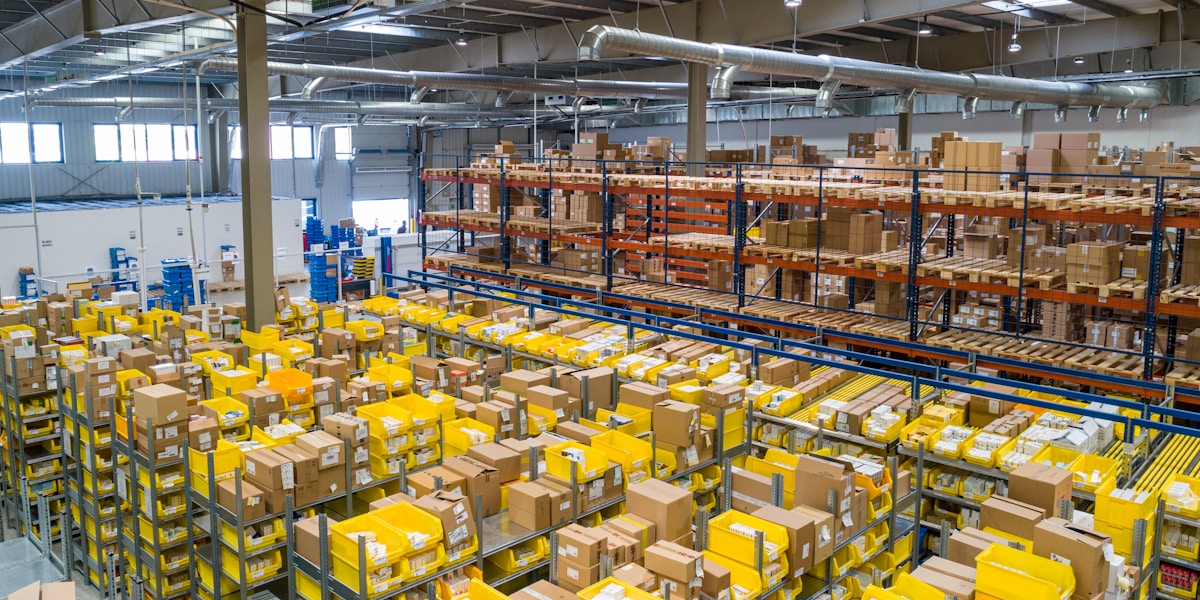
Importing adult products from China involves unique logistics challenges that general consumer goods don't face. From customs classification to discreet shipping requirements, understanding the logistics landscape is essential for smooth operations and avoiding costly delays.
This guide covers everything you need to know about getting products from factory to your warehouse.
Shipping Methods Compared
Sea Freight (FCL/LCL)
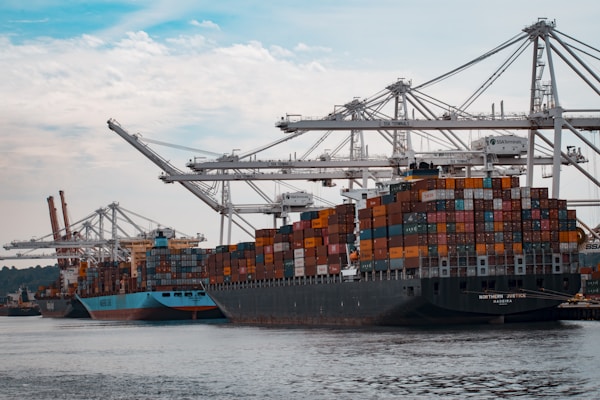
Most cost-effective for large orders. FCL (Full Container Load) for 5+ CBM, LCL (Less than Container Load) for smaller shipments.
Air Freight
Fastest option for urgent orders. 3–5x more expensive than sea but delivers in 5–7 days. Ideal for samples and small orders.
Rail Freight (China-Europe)
Middle ground between sea and air. 18–22 days to Europe via the China-Europe Railway Express. Growing in popularity.
Express Courier
DHL, FedEx, UPS for samples and small parcels. 3–5 days delivery. Door-to-door service with tracking. Highest per-kg cost.
Cost Comparison for a Typical Order
| Method | 100kg Shipment | 500kg Shipment | 2000kg Shipment | Transit Time |
|---|---|---|---|---|
| Express (DHL/FedEx) | $800–$1,200 | $3,500–$5,000 | Not practical | 3–5 days |
| Air Freight | $600–$900 | $2,500–$4,000 | $8,000–$15,000 | 5–7 days |
| Rail (to EU) | $400–$600 | $1,500–$2,500 | $4,000–$7,000 | 18–22 days |
| Sea (LCL) | $300–$500 | $800–$1,500 | $2,000–$3,500 | 25–35 days |
| Sea (FCL 20ft) | — | — | $1,500–$3,000 | 25–35 days |
Understanding Incoterms
Incoterms define who is responsible for shipping costs, insurance, and risk at each stage:
EXW (Ex Works)
You handle everything from the factory door. Lowest product price but you manage all logistics, customs, and shipping. Best for experienced importers with their own freight forwarder.
FOB (Free on Board)
Manufacturer delivers goods to the port and handles export customs. You take responsibility once goods are loaded on the vessel. The most common term for China exports.
CIF (Cost, Insurance, Freight)
Manufacturer pays for shipping and insurance to your destination port. You handle import customs and local delivery. Good for buyers who want simpler logistics.
DDP (Delivered Duty Paid)
Manufacturer handles everything — shipping, insurance, import customs, and delivery to your door. Highest product price but zero logistics hassle. Best for new importers.
Customs and Import Regulations
Adult products face specific customs considerations in different markets:
HS Code Classification
Adult products typically fall under these HS codes:
- 9619.00 — Sanitary towels and similar articles (some wellness devices)
- 8543.70 — Electrical machines with individual functions (vibrators)
- 9503.00 — Toys (some markets classify adult products here)
- 3926.90 — Articles of plastics (non-electronic products)
Correct HS code classification is critical — wrong codes can trigger delays, additional duties, or seizure.
Import Duty Rates by Market
| Market | Typical Duty Rate | VAT/GST | Special Requirements |
|---|---|---|---|
| United States | 0–6.5% | No federal VAT | State-level restrictions vary |
| European Union | 0–6.5% | 19–27% (varies by country) | CE, RoHS, REACH required |
| United Kingdom | 0–6.5% | 20% | UKCA marking required |
| Canada | 0–8% | 5% GST + provincial | Health Canada guidelines |
| Australia | 0–5% | 10% GST | TGA classification possible |
| Japan | 0–5.3% | 10% | PSE for electrical products |
Packaging for Shipping
Proper shipping packaging prevents damage and ensures discretion:
- Individual products in retail packaging, then in master cartons
- Master cartons labeled with generic descriptions (e.g., “electronic devices”)
- Bubble wrap or foam inserts for fragile items
- Silica gel packets to prevent moisture damage during sea freight
- Carton weight under 20kg for easy handling
- Palletized for FCL shipments to prevent shifting
- No explicit product images on outer shipping cartons
- Waterproof inner bags for sea freight protection
Lithium Battery Shipping Regulations
Most adult products contain lithium batteries, which have strict shipping regulations:
Air Freight Requirements:
- UN38.3 battery test report required
- MSDS (Material Safety Data Sheet)
- Proper DG (Dangerous Goods) labeling
- Battery capacity limits per package
- Special packaging requirements
- Some airlines restrict lithium batteries
Sea Freight Requirements:
- Less restrictive than air freight
- UN38.3 still recommended
- IMDG Code compliance
- Proper labeling on master cartons
- Battery must be installed in device (not loose)
- Documentation for customs clearance
Common Logistics Mistakes to Avoid
Wrong HS Codes
Incorrect classification leads to wrong duty rates, delays, or seizure. Work with a customs broker experienced in adult products.
Missing Certifications
Shipping without CE/RoHS documents to the EU will result in customs hold. Have all certificates ready before shipment.
Undervalued Invoices
Declaring lower values to reduce duties is illegal and can result in penalties, seizure, and import bans.
No Insurance
Sea freight carries risk of damage, loss, or container delays. Always insure shipments — typically 0.3–0.5% of cargo value.
Working with Freight Forwarders
A good freight forwarder is invaluable for adult product imports:
Choose Experienced Forwarders
Select a freight forwarder with specific experience in adult products. They’ll know the HS codes, documentation requirements, and potential issues.
Get Multiple Quotes
Compare at least 3 freight forwarders. Prices can vary significantly. Ask for all-inclusive quotes to avoid hidden surcharges.
Verify Documentation
Your forwarder should review all shipping documents before departure — commercial invoice, packing list, certificates, and battery documents.
Track and Communicate
Use tracking tools and maintain regular communication. Good forwarders proactively alert you to delays or issues.
Last-Mile Delivery and Warehousing Strategy
Getting goods to your destination port is only half the equation. How you store and distribute inventory once it arrives determines your fill rates, your cash flow, and ultimately your customer experience. For adult product importers, the right warehousing model depends heavily on order volume and market reach.
Third-Party Logistics (3PL)
Outsource warehousing, pick-and-pack, and last-mile delivery to a specialist 3PL. Low fixed overhead, scales with volume. Ideal for importers doing under $2M annual revenue.
Amazon FBA
Amazon’s fulfillment network handles storage, shipping, and customer service for Amazon marketplace orders. High fees (15–20% referral + FBA fees) but unmatched reach and Prime eligibility.
Own Warehouse
Full control, lowest per-unit fulfillment cost at scale. Requires significant fixed investment in rent, staff, and WMS software. Viable once monthly shipments exceed 5,000+ units.
Cross-Docking
Goods arrive at a distribution hub and are immediately sorted and re-shipped without long-term storage. Minimizes holding costs for fast-moving SKUs with predictable demand.
Choosing the Right Model by Volume
| Monthly Order Volume | Recommended Model | Key Reason |
|---|---|---|
| Under 500 units/month | 3PL + Amazon FBA | Low fixed cost, fast setup |
| 500–2,000 units/month | 3PL with dedicated area | Better rates, brand control |
| 2,000–10,000 units/month | Dedicated 3PL or hybrid | Volume justifies dedicated contract |
| 10,000+ units/month | Own warehouse | Fixed cost beats 3PL per-unit fees |
Strategic Stock Location for Multi-Market Distributors
Positioning inventory closer to end customers dramatically reduces last-mile delivery time and cost. For brands serving both the EU and US markets simultaneously, a split-stock strategy is worth the additional complexity:
EU Distribution (Netherlands/Germany):
- Rotterdam and Frankfurt are the leading logistics hubs
- Bonded warehouse allows re-export within EU without import duty until sold
- VAT deferment schemes available in NL and DE
- Rail freight from China lands directly in these hubs
US Distribution (California/New Jersey):
- LA/Long Beach port for West Coast fulfillment
- NJ/NY for East Coast and Amazon FBA feeds
- 3PL networks like ShipBob and ShipMonk specialize in DTC brands
- Consider FTZ (Foreign Trade Zone) warehousing for duty deferral
Returns and Reverse Logistics
Adult product returns require more careful handling than typical consumer goods. Hygiene considerations, consumer privacy, and cross-border complexity make reverse logistics a specialized discipline that many importers underestimate.
Return Rate Benchmarks
For intimate wellness products, typical return rates range from 3–8% in the DTC channel, and 1–3% in B2B wholesale. Higher rates usually indicate product quality issues, misleading descriptions, or packaging damage in transit — all addressable root causes.
The Return Authorization Process
Return Merchandise Authorization (RMA)
Customer contacts support and receives a unique RMA number. This tracks the return, captures reason codes, and controls which products are eligible. Never accept returns without an RMA — it prevents fraud and ensures traceability.
Inbound Inspection
Returned units are received at your 3PL or warehouse and inspected against defined criteria: unopened/sealed, defective but unopened, or used. Reason codes (defective, wrong item, not as described) are logged for root cause analysis.
Disposition Decision
Sealed, unopened returns can be restocked. Defective units are held for manufacturer credit claims. Used products — due to hygiene — must be destroyed. Document destruction for your records and any warranty/liability purposes.
Manufacturer Credit or Replacement
Batch defective units and submit credit requests to your manufacturer quarterly. Most reputable manufacturers accept defect claims at 1–2% of order value without dispute, provided you have photographic evidence and batch traceability.
Cross-Border Return Complexity
International returns are significantly more complicated than domestic ones. Key issues include:
- Re-import duties apply when goods re-enter China — often making return shipment economically unviable
- For EU consumers, the 14-day return right under the EU Consumer Rights Directive applies — but hygiene exemptions cover opened intimate products in most member states
- Maintain a small local refund/replace stock buffer to avoid cross-border returns entirely for low-value units
- Cargo insurance should explicitly cover return shipments if you’re moving returned goods back to the manufacturer
- Clearly state your return policy on all product listings — ambiguity increases disputes and chargebacks
Digital Documentation and Compliance Technology
Modern logistics compliance is increasingly technology-driven. Importers who still rely on manual spreadsheets and emailed PDF certificates face higher error rates, slower customs clearance, and greater audit risk. Embracing digital tools is now a competitive advantage, not an optional upgrade.
Digital Customs Broker Portals
Platforms like Flexport, Customs City, and Descartes provide online dashboards for managing shipments, submitting customs entries, and tracking clearance status in real time — across multiple markets from one interface.
AI-Assisted HS Code Classification
Tools such as Zonos, Tariff.io, and WCO-integrated AI classifiers analyze product descriptions and images to suggest accurate HS codes, flagging ambiguous classifications that need human review before submission.
Blockchain Certificate Tracking
Platforms like Sourcemap and TradeLens allow manufacturers to upload certification documents (CE, RoHS, UN38.3) to an immutable blockchain record. Buyers and customs authorities can verify authenticity instantly without contacting the issuing lab.
E-Invoicing Standards
The EU’s mandatory e-invoicing rollout (Peppol network) and similar initiatives in APAC are standardizing trade document formats. Using Peppol-compliant invoicing eliminates manual data re-entry and reduces customs declaration errors.
Building a Digital Documentation Checklist
The following documents should exist as verified digital files — not paper scans — before any shipment departs:
- Commercial invoice (PDF with digital signature or e-invoice standard format)
- Packing list with exact carton dimensions, weights, and unit counts
- Bill of Lading or Air Waybill (electronic B/L preferred — reduces fraud risk)
- CE Declaration of Conformity and test reports (linked from blockchain or secure document portal)
- RoHS and REACH compliance declarations
- UN38.3 battery test report and MSDS for lithium battery products
- Certificate of Origin (CO) for duty preference schemes (e.g., GSP)
Conclusion
Logistics is often the most overlooked aspect of adult product importing, but getting it right is essential for profitability and reliability. Invest time in understanding shipping options, customs requirements, and finding the right logistics partners.
Hassle-Free Shipping with POLYELE
We offer flexible shipping terms (FOB, CIF, DDP) and work with experienced freight forwarders who specialize in adult product logistics. All shipments include complete documentation — certificates, battery reports, and customs paperwork.



4 Comments
The Incoterms section is one of the clearest explanations I've seen written for non-logistics professionals. We always advise new importers to start with DDP even though it costs more — the peace of mind of a single all-in invoice while you're learning the landscape is worth the premium.
Lithium battery documentation is a genuine pain point. For air freight, we've started requesting the UN38.3 test reports and MSDS at the same time as the product sample — not waiting until the order is ready to ship. Nothing delays a launch like discovering battery docs are missing 48 hours before collection.
The HS code issue is critical and underappreciated. We use a licensed customs broker who specializes in adult product imports and she has probably saved us five times her annual fee in avoided duties and delays. The €150-200 per shipment cost is trivial compared to the risk.
Split-stock between EU and US is something more distributors should consider. We hold 8 weeks of inventory in a Dutch 3PL and 6 weeks in a US fulfillment center. The visibility on stock levels across both locations from a single dashboard was the game-changer — we used ShipBob for US and DSV for EU.